Cannabis edibles dosage guide three words that can save you from the most common rookie mistake in Canada’s cannabis market: eating a second gummy because the first one “isn’t working,” only to be overwhelmed two hours later. It happens more than you’d think, and it is entirely preventable. At Medical High, we have helped thousands of Canadians make confident, informed choices about edibles and this guide brings that expertise directly to you. Whether you are brand new to cannabis-infused foods or simply want to sharpen your understanding of THC gummies, onset windows, and safe dosing, you will find clear, evidence-based answers here. What follows is the most thorough cannabis edibles dosage guide you will find online.
What Are Cannabis Edibles? A Beginner’s Overview
Cannabis edibles are food and beverage products infused with cannabinoids most commonly THC (tetrahydrocannabinol), CBD (cannabidiol), or a combination of both. Available across Canada through retailers such as Medical High, edibles deliver cannabinoids through the digestive system rather than the lungs, which fundamentally changes how quickly and how intensely the effects are felt.
How Edibles Differ from Smoking or Vaping
The critical difference lies in metabolism. When you inhale cannabis, THC enters the bloodstream almost instantly through the lung tissue, producing effects within seconds to a few minutes. Edibles, by contrast, must pass through the stomach and small intestine before reaching the liver a process that can take anywhere from 30 minutes to two full hours. This delay is the single most important piece of information in any cannabis edibles dosage guide, and yet it remains the most frequently ignored.
Even more significant is what the liver does to THC during this so-called first-pass metabolism. It converts delta-9-THC into 11-hydroxy-THC, a metabolite that crosses the blood-brain barrier more efficiently and produces a more intense, longer-lasting body effect than inhaled THC. This is why the same 5 mg of THC can feel dramatically stronger when eaten than when vaped. The duration of edible effects typically spans four to eight hours, compared to one to three hours for inhalation methods a meaningful distinction for anyone planning their evening or managing their day.
Types of Cannabis Edibles Available in Canada
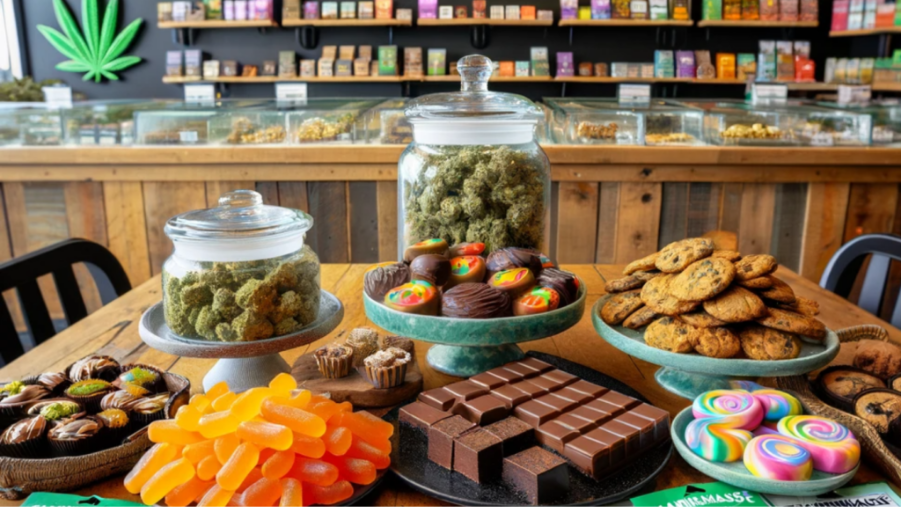
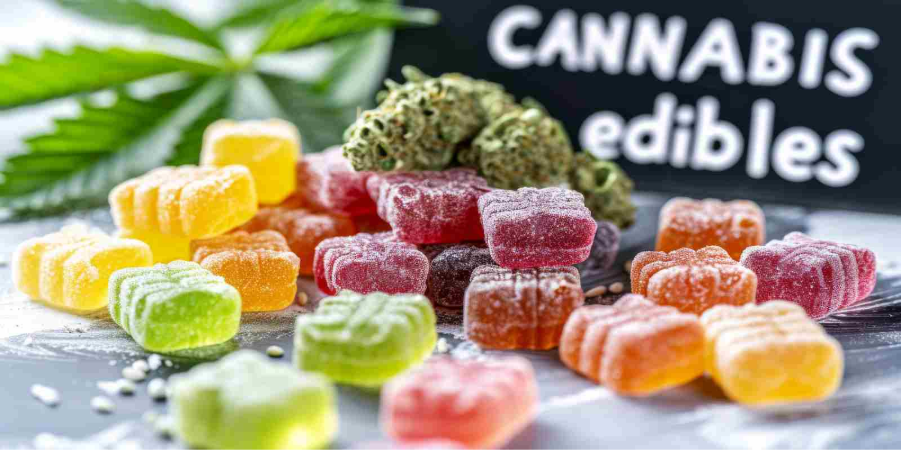
Medical High carries a wide range of edible formats to suit every preference. THC gummies remain the most popular choice among Canadian edible shoppers due to their precise dosing, long shelf life, and consistent flavour profiles. Chocolate bars and mints offer a familiar confectionery experience, while cannabis-infused beverages including sparkling waters and teas have grown rapidly in popularity thanks to their faster onset, often as little as 15 to 30 minutes when formulated with nano-emulsified THC. Capsules and softgels round out the category for those who prefer a clinical, flavour-free format.
Products are further differentiated by their cannabinoid ratio. THC-dominant edibles deliver the psychoactive experience most people associate with cannabis. CBD-dominant edibles offer therapeutic benefits including stress relief and physical relaxation without intoxication. Balanced 1:1 product sits between the two extremes, allowing CBD to moderate THC’s more intense effects. Understanding which format and ratio aligns with your goals is the first step in building a smart, personalised cannabis edibles dosage guide for yourself. Medical High carries a wide range of cannabis edibles designed to suit different preferences, from gummies and chocolates to infused beverages and capsules.
Cannabis Edibles Dosage Guide: How Much Should You Take?
Dosage is where most edible shoppers need the most help and were getting it wrong carries the most consequence. Too little and you may feel nothing and be tempted to redose too soon. Too much and you risk an uncomfortable experience that can last several hours. The good news is that with a clear cannabis edibles dosage guide and a little patience, finding your ideal dose is a straightforward process.
Understanding THC Dosage in Milligrams (mg)
Cannabis edibles are labelled in milligrams of THC per serving and per package, giving you precise and consistent dosing information. A standard single serving is typically 10 mg, which provides a useful reference point for understanding potency. You will often encounter two figures on the label: total THC, which includes inactive THCA, and active THC, which reflects the actual psychoactive content delivered in a cold-processed product like a gummy. For edibles, the active THC number is always the relevant one.
It is worth emphasising why milligrams matter more than percentage in this context. With dried flower, THC percentage helps you gauge potency per gram. With edibles, the milligram figure tells you exactly how much active compound is entering your body there is no combustion variability, no inhalation technique to account for. A 5 mg gummy from Medical High delivers 5 mg every single time, which is precisely why a reliable cannabis edibles dosage guide is possible to write at all.
Dosage by Experience Level
The following table is your at-a-glance cannabis edibles dosage guide. Use it as a starting point, not prescription individual responses vary, and factors explored in the next section will influence where you fall on this spectrum.
| Dose (THC) | Level | Effects | Best For |
|---|---|---|---|
| 1 – 2.5 mg | Microdose | Subtle, functional clarity | First-timers, anxiety |
| 2.5 – 5 mg | Low | Mild relaxation, light euphoria | Casual recreational use |
| 5 – 10 mg | Moderate | Stronger body effects, deeper calm | Experienced users |
| 10 mg+ | High | Intense psychoactivity, sedation | High tolerance only |
A microdose of 1 to 2.5 mg is the right entry point for anyone trying edibles for the first time, those who are sensitive to THC, or individuals using cannabis specifically to manage anxiety without noticeable intoxication. The low range of 2.5 to 5 mg produces light euphoria and mild relaxation and is appropriate for casual recreational use in a safe, comfortable setting. The moderate range of 5 to 10 mg is best reserved for those with established tolerance who understand how their body responds to edibles. Anything above 10 mg should be approached with significant caution and is generally suited only to experienced consumers with high tolerance.
Factors That Affect Your Ideal Edible Dose
Dosage is never one-size-fits-all. Body composition plays a role individual with higher body weight and faster metabolisms may process cannabinoids differently than those with slower digestive systems, although the relationship is not linear enough to use bodyweight as a precise dosing calculator. Your prior experience with cannabis is the most reliable predictor: if you have never consumed THC in any form, begin at the lowest end of the microdose range and be patient.
Food intake at the time of consumption matters considerably. Taking an edible on an empty stomach accelerates absorption and can produce a sharper, more intense onset. Eating a fatty meal beforehand slows digestion but may enhance THC absorption due to its fat-soluble nature an effect that can make the same dose feel stronger than expected. Finally, the CBD:THC ratio of the product you choose will influence the character and intensity of the experience. CBD acts as a partial modulator of THC’s psychoactive effects, which is why many new users at Medical High are guided toward a balanced 1:1 product as a gentler introduction.
Edible Effects Timeline: What to Expect and When
Understanding the edible effects timeline is arguably as important as understanding dosage itself. The two are deeply linked: most overconsumption incidents occur not because someone took too much to begin with, but because they misread the onset window and took more too soon. Knowing what to expect and when removes that guesswork entirely.
The Edible Onset Window (30 Min – 2 Hours)
Once you consume an edible, the cannabinoids must survive digestion, be absorbed through the intestinal lining, travel to the liver for first-pass metabolism, and then enter systemic circulation before they can reach the brain. That entire process takes between 30 minutes and two hours for the vast majority of consumers. Nano-emulsified products and cannabis beverages with water-soluble THC formulations are an exception their smaller particle size allows for faster absorption, often producing onset within 15 to 30 minutes.
The golden rule at Medical High is simple and non-negotiable: wait a full two hours before considering any additional dose. If you are at the 90-minute mark and feel nothing, that is not a sign the edible is not working it is a sign your digestion is on the slower end of normal. Taking a second piece before the first has fully activated is the most reliable way to have an unpleasant experience.
Peak Effects: When Will You Feel the Most?
For most consumers, peak effects from a standard cannabis edible arrive somewhere between two and four hours after consumption. At this point, the 11-hydroxy-THC produced by liver metabolism is at its highest concentration in the bloodstream. The character of the peak is often described as more body-centred and sedative than the head-focused effects of inhaled cannabis a distinction driven by the unique pharmacological profile of 11-hydroxy-THC, which is both more potent and slower to clear than delta-9-THC.
The difference between a 5 mg peak and a 10 mg peak is meaningful. At 5 mg, most experienced users report gentle relaxation, mild perceptual shifts, and a pleasant calm. At 10 mg, those effects are considerably amplified deeper physical sedation, more pronounced euphoria, and for some, a level of intensity that can feel overwhelming if they were not expecting it. This is why knowing your place on the dosage spectrum before you consume is far preferable to discovering it during peak effects.
How Long Do Edible Effects Last?
The average duration of edible effects falls between four and eight hours, though high doses consumed by individuals with low tolerance can produce residual effects grogginess, cognitive fog, or lingering sedation for up to twelve hours. This has practical implications: plan your edible experience around a time when you have no obligations, no driving, and no need for sharp cognitive function. At Medical High, we always remind customers to treat their first edible experience as an evening-in activity, even if the dose is conservative, simply to give themselves the time and space to observe how their body responds.
Edible Safety Tips: How to Have a Positive Experience
Safety is not a secondary concern when it comes to cannabis edibles it is the foundation on which every enjoyable experience is built. The following edible safety tips are grounded in real-world experience and cannabis science, and they apply whether you are trying edibles for the first time or simply revisiting them after a long break.
The ‘Start Low, Go Slow’ Method
Start Low, Go Slow is not just a slogan it is the most evidence-supported approach to cannabis dosing available. Begin with 2.5 mg to 5 mg of THC, allow at least two hours for onset, and resist the urge to redose if effects feel subtle at the one-hour mark. On your first few sessions, the goal is calibration, not intoxication. Over several experiences, you will develop an accurate map of your personal response curve, which makes every subsequent cannabis edible dosage guide decision more confident and more precise.
Keeping a simple consumption journal is one of the most practical tools any edible user can adopt. Note the product, dose, the time of consumption, what you had eaten beforehand, and how you felt at the 1-hour, 2-hour, and 4-hour marks. Within three or four sessions, patterns emerge that are far more useful than any generalised dosage chart including this one.
What to Do If You’ve Taken Too Much
Overconsumption of cannabis is not medically dangerous, but it can be deeply uncomfortable. If you find yourself experiencing rapid heartbeat, heightened anxiety, paranoia, nausea, or an overwhelming sense of sedation, the most important thing is to remain calm and remember that these effects are temporary and will pass. Move to a quiet, comfortable space, hydrate with water, and lie down if dizziness is present. Some research suggests that CBD can help moderate an intense THC experience by partially occupying the same receptor sites keeping a CBD-only product on hand is a sensible precaution for anyone experimenting with higher doses.
Do not attempt to drive or operate machinery under any circumstances. Avoid alcohol, which can significantly intensify THC effects.
Safe Storage: Keeping Edibles Away from Children and Pets
Store your edibles in their original sealed packaging in a locked cabinet or a high shelf that is out of reach of children and pets. Never transfer edibles into regular food containers a gummy placed alongside regular candy is an obvious hazard. Keeping your products safely stored is one of the simplest and most important habits you can build as a responsible edible consumer.
Choosing the Right Edible: THC, CBD, or Balanced?
With the dosage and safety foundations in place, the final piece of personalising your cannabis edibles dosage guide is product selection. The cannabinoid profile you choose will shape the character of your experience more than almost any other variable. Experienced consumers often prefer formats like THC chocolate because they combine familiar flavours with a reliable and longer-lasting edible experience.
THC-Dominant Edibles: Best For
- Recreational euphoria, laughter, and deep physical relaxation in a social or solo setting
- Sleep support at moderate to high doses, where the sedative body effect is particularly valuable
- Experienced cannabis users who have an established tolerance and a clear understanding of their response to THC
- Creative exploration or stress relief for those who find THC’s psychoactivity enjoyable rather than anxiety-inducing
CBD-Dominant Edibles: Best For
- Anxiety and stress relief without any psychoactive impairment, making them suitable for daytime use
- Beginners or THC-sensitive individuals who want the wellness benefits of cannabis without intoxication
- Those managing chronic discomfort, inflammation, or sleep difficulties who prefer a clear-headed approach
- Anyone who needs to remain functional and productive while still incorporating cannabis into their wellness routine
Beginners or THC-sensitive individuals often start with CBD products that provide stress relief and relaxation without the psychoactive effects of THC.
(THC: CBD) Edibles: Best For
Balanced products occupy a uniquely versatile middle ground. The CBD content modulates the psychoactivity of THC, reducing the likelihood of anxiety or paranoia while preserving a pleasant, mildly euphoric effect. This makes 1:1 edibles an excellent choice for users who are building their tolerance gradually, for those who have had difficult experiences with high-THC products in the past, or for anyone seeking the pain-relieving and anti-inflammatory synergy that emerges when THC and CBD work together a phenomenon researchers refer to as the entourage effect. At Medical High, 1:1 gummies are among our most recommended products for edible newcomers looking for a reliable, manageable experience. If you are unsure which edible is right for you, our team at Medical High is always available to help guide you toward the safest and most enjoyable option.
Final Thoughts: Your Cannabis Edibles Dosage Guide at a Glance
Cannabis edibles are one of the most rewarding and accessible ways to experience cannabis when approached with the right knowledge. The core principles of this cannabis edibles dosage guide can be distilled into three commitments: start at the lowest effective dose, respect the onset window without exception, and choose a cannabinoid profile that aligns with your personal goals and tolerance level. Whether you are a first-time edible user reaching for a 2.5 mg gummy or an experienced consumer exploring the higher end of the dosage spectrum, the difference between a great experience and an overwhelming one almost always comes down to patience and preparation.
At Medical High, we believe that informed consumers make safer, happier choices. Our team is available in-store and online to help you navigate the full range of edible products at medicalhigh.ca from THC gummies and chocolates to CBD capsules and balanced beverages. Browse our complete selection of premium cannabis edibles at medicalhigh.ca and let this cannabis edibles dosage guide be your starting point for a confident, enjoyable experience every time.
Frequently Asked Questions About Cannabis Edibles Dosage
Q.1 How long does it take for edibles to kick in?
Cannabis edibles typically take between 30 minutes and two hours to produce noticeable effects, depending on your individual metabolism, what you have recently eaten, and the specific formulation of the product. Nano-emulsified beverages and fast-acting formats may onset in as little as 15 minutes. Regardless of format, always wait the full two hours before considering any additional dose the most common cause of overconsumption is redosing too soon.
Q.2 How strong are edibles compared to smoking?
Edibles are generally considered more potent and longer lasting than smoked or vaped cannabis, even at equivalent milligram doses. This is because the liver converts ingested THC into 11-hydroxy-THC, a metabolite that crosses the blood-brain barrier more efficiently and produces stronger physical sedation. A 5 mg edible can feel more intense than 5 mg vaped which is why this cannabis edibles dosage guide consistently recommends starting lower with edibles than with inhalation methods.
Q.3 What is a safe edible dose for a first-time user?
For a first-time user, 2.5 mg to 5 mg of THC is a safe and appropriate starting point. A standard edible serving is typically 10 mg for a fir’s timer, starting at half that amount is more than sufficient to gauge your sensitivity. The Start Low, Go-Slow approach is the cornerstone of responsible edible use, and it is the method Medical High recommends to every new customer without exception.
Q.4 Where can I buy THC gummies in Canada?
THC gummies are widely available across Canada through cannabis retailers. Medical High carries a curated selection of THC gummies in a variety of potencies, flavours, and formats to suit different experience levels and preferences. You can explore the full range at medicalhigh.ca and find the right product for your needs.
Q.5 Does eating before taking an edible change the effects?
Yes, significantly. Consuming an edible on an empty stomach generally produces a faster, sharper onset and a more intense peak, since there is less food to slow digestion. Eating a full meal before particularly one containing fats can delay onset by an additional 30 to 60 minutes but may enhance total THC absorption due to cannabis’s fat-soluble nature. For predictable results, most experienced users consume edibles approximately one to two hours after a light meal.
Q.6 What should I do if I feel too high from an edible?
If you consume too much THC from an edible, stay calm the effects are temporary and will not cause lasting harm. Find a quiet, safe space to lie down, drink water, and avoid alcohol entirely. A dose of CBD, if available, may help reduce anxiety and paranoia by moderating THC’s activity at cannabinoid receptors. Breathing slowly and grounding yourself with simple sensory awareness noticing sounds, textures, or smells around you can help manage discomfort. Effects from a standard edible dose will typically diminish significantly within four to six hours.